
History of Gurdwara Baba Atal Rai Ji: The 9-Storey Monument and the Story of Divine Resignation
Explore the story of Gurdwara Baba Attal Rai Ji, Amritsar's tallest structure. This 9-story tower commemorates the 9-year life of Guru Hargobind Sahib's son, Baba Attal Rai, and his profound sacrifice.
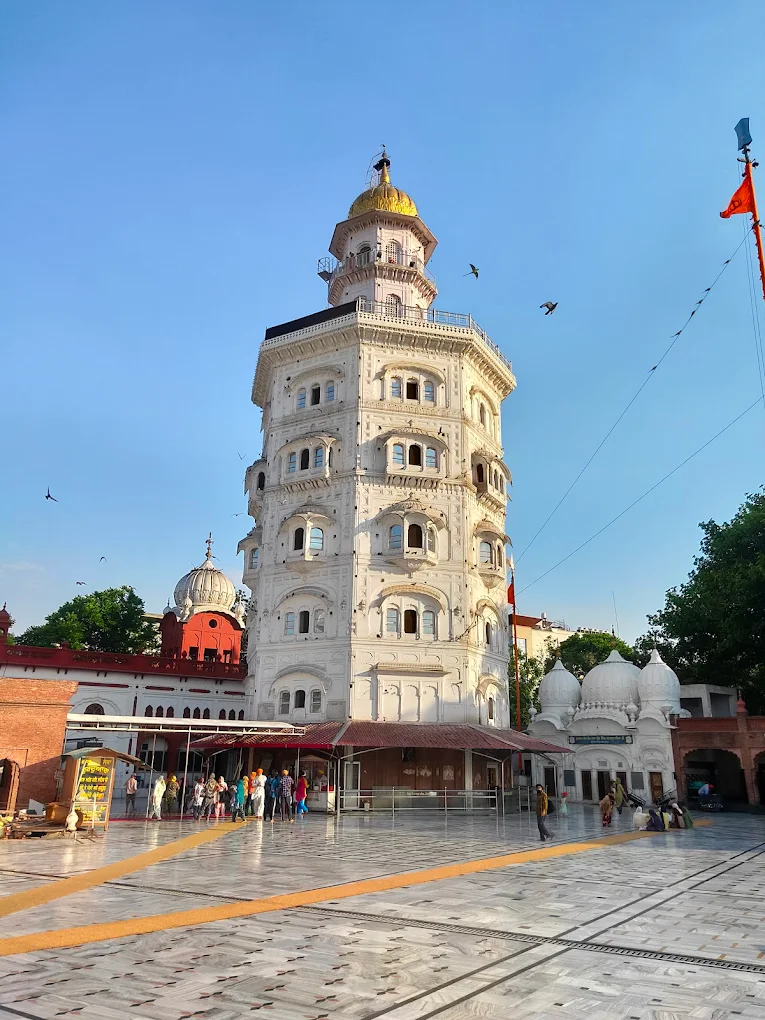
Located in the sacred city of Amritsar, in close proximity to the Sri Harmandir Sahib (Golden Temple), Gurdwara Baba Atal Rai Ji stands as a magnificent testament to Sikh history, spirituality, and architectural brilliance. Rising high above the skyline, it is the tallest architectural structure in Amritsar. Its nine distinct storeys do not merely represent structural grandeur; they symbolize the nine short years of Baba Atal Rai Ji’s earthly life and his ultimate, supreme sacrifice.
This blog explores the profound life of Baba Atal Rai Ji, the spiritual miracle he performed, the subsequent divine command of his father, and the historical and architectural significance of this sacred shrine.
Birth and Early Childhood of Baba Atal Rai Ji
Baba Atal Rai Ji was born on October 23, 1619, in the holy city of Amritsar. He was the beloved son of the sixth Sikh Guru, Sri Guru Hargobind Sahib Ji, and Mata Nanaki Ji.
From his earliest childhood, Baba Atal Rai Ji exhibited an unusually serene, brilliant, and spiritually elevated disposition. He possessed a profound spiritual aura, and it was often observed that whatever words crossed his lips would invariably manifest as absolute truth. Because of his wisdom, spiritual maturity, and the deep reverence he commanded, the Sikh congregation (Sangat) and his family affectionately addressed him as 'Baba' (a term of respect usually reserved for elders), despite his tender age.
In the evenings, he would play with children of his own age. Even during these ordinary childhood games, he would effortlessly impart lessons on divine virtues, righteousness, and the path of truth to his companions.
The Historic Miracle: Reviving Mohan
The most pivotal and historically definitive event of Baba Atal Rai Ji’s life centers around his close childhood friend, Mohan, who was the son of a local merchant named Suini Shah.
An Unfinished Game
One evening, Baba Ji, Mohan, and their playmates were engrossed in a game of 'Khiddo-Khoondi' (a traditional game akin to field hockey). As they played, dusk fell rapidly, and darkness enveloped the playground. It was Mohan’s turn to defend or give his 'meeti' (innings/turn) just as the game had to be halted. By mutual agreement, the children decided to wrap up for the day, on the condition that Mohan would return first thing the next morning to fulfill his turn.
Tragedy Strikes: The Fatal Snakebite
That very night, tragedy struck Mohan's household. While gathering firewood or moving in the dark, Mohan was bitten by a highly venomous cobra. Despite desperate attempts to save him, the deadly venom spread rapidly through his body, and he passed away before dawn.
The next morning, Baba Atal Rai Ji arrived at the playground, but Mohan was nowhere to be found. Sensing something was amiss, Baba Ji walked over to Mohan’s house. Upon arrival, he encountered a scene of profound grief—Mohan’s parents and relatives were weeping bitterly, and Mohan’s lifeless body lay still on the floor, covered entirely by a white shroud.
"Wake Up, Mohan! Give Us Our Turn"
Driven by innocent childhood affection and the pure bond of friendship, Baba Ji stepped forward and said, "Mohan is not dead; he is merely pretending to sleep so he can escape giving us our turn in the game."
Placing his playing stick (khoondi) gently against Mohan’s lifeless body, Baba Ji spoke with divine authority:
"Wake up, Mohan! Shake off this laziness and stand up while uttering 'Satnam Waheguru'. First, give us our turn in the game, and after that, you may sleep for as long as you wish."
The moment these words were uttered, a breathtaking, transcendental miracle occurred. Mohan gasped deeply, rubbed his eyes as if waking from a profound, uninterrupted slumber, and sat up completely healthy. The venom had vanished entirely.
The family, neighbors, and onlookers were left utterly spellbound. Word spread like wildfire across the entire city of Amritsar that the young son of the Guru had brought a dead child back to life.
The Verdict of Guru Hargobind Sahib Ji: 'Reversing the Divine Will'
When news of this miracle reached the court of the sixth sovereign, Sri Guru Hargobind Sahib Ji, he did not rejoice. In the core philosophy of Sikhism, the display of occult miracles (Karamat) or interfering with the absolute Will of the Almighty (Bhana) is strictly forbidden. It is viewed as an act of spiritual vanity that opposes cosmic law.
When Baba Atal Rai Ji came to the Akal Takht Sahib to pay his respects, Guru Sahib looked at him with gravity and delivered a profound reprimand:
"You have interfered with and reversed the Divine Will of the Almighty. Displaying miracles is akin to invoking divine wrath. If we begin altering the laws of life and death for personal attachments, what will remain of God’s supreme justice and cosmic order? In the Guru’s house, spiritual powers (Riddhis and Siddhis) are considered low attachments. Tell me now, since you have saved his life by breaking the law of nature, who will compensate for this spiritual debt? Who will depart in his place?"
Baba Atal Rai Ji was incredibly wise and spiritually attuned. He instantly grasped the immense gravity of his father's words and the fundamental doctrine of the Sikh faith. He recalled the supreme sacrifice of his grandfather, the fifth Guru, Sri Guru Arjan Dev Ji, who endured horrific tortures on burning hot plates but completely surrendered to the Divine Will without executing a single miracle to save himself.
Bowing his head in deep humility, Baba Ji replied, "True King! I acknowledge my error. I shall honor the Divine Will of the Almighty by offering my own life in place of Mohan's."
The Supreme Sacrifice (Sariir Tyagana)
After seeking the silent blessings of Guru Sahib, the nine-year-old Baba Atal Rai Ji quietly walked away from the Akal Takht. He took a cleansing bath in the holy nectar of the Amrit Sarovar, performed a devout circumambulation (Parikrama) of Sri Harmandir Sahib, and walked over to the serene banks of the nearby Kaulsar Sarovar.
Sitting quietly by the edge of the water, he mindfully recited the Japji Sahib prayer, offered a final ardaas (supplication) to the Timeless Creator, placed his playing stick beneath his head as a pillow, wrapped himself completely in his shawl, and lay down. On September 13, 1628, at the tender age of just nine years, Baba Atal Rai Ji seamlessly withdrew his consciousness from his physical body and merged back into the Eternal Light (Sachkhand).
When Guru Hargobind Sahib Ji was informed of his son's departure, he instructed the congregation not to mourn. He declared that Atal Rai had immortalized himself by accepting the Will of God with ultimate grace. The funeral pyre was lit at the exact spot where Baba Ji chose to leave his physical form.
Architecture and Significance of the Gurdwara
The monument built in memory of Baba Atal Rai Ji is widely recognized as one of the most stunning examples of Sikh architecture in existence. The construction of the present-day structure began during the late 18th century (around 1778–1784 CE) during the era of the Sikh Misls and was later fully embellished, expanded, and brought to its current grand form under the patronage of Maharaja Ranjit Singh.
Structural Highlights:
The 9-Storey Octagonal Tower: The unique octagonal design features nine floors, with each level directly corresponding to one year of Baba Ji’s life on Earth. Standing at approximately 40 meters, it offers a commanding view of the surrounding landscape.
Exquisite Historical Frescoes: The interior walls of the lower levels are adorned with exceptional 19th-century frescoes executed by legendary Sikh artists (such as Bhai Jaimal Singh). These intricate wall paintings primarily depict detailed scenes from the Janamsakhis (biographical accounts) of Sri Guru Nanak Dev Ji.
The Golden Dome: The apex of the tower features a beautifully crafted, gilded golden dome that glistens in the sunlight, reflecting the spiritual light of the shrine below.
"Baba Atal, Pakkiyan-Pakaiyan Ghal" – The Endless Tradition of Langar
A legendary and deeply cherished proverb is universally tied to this shrine: "Baba Atal, Pakkiyan-Pakaiyan Ghal" (which translates to: "Baba Atal, send us fully cooked meals").
True to Baba Ji’s deeply compassionate nature, it is believed he could never bear to see anyone go hungry. Honoring this legacy, the community kitchen (Langar) at Gurdwara Baba Atal Rai Ji operates 24 hours a day, completely uninterrupted. Thousands of pilgrims, travelers, and the less fortunate are fed hot, nutritious meals at any given hour of the day or night. It stands as a living, breathing testament to selfless service (Sewa) and unconditional charity (Parupkar).
Conclusion and Eternal Lesson
The poignant history of Baba Atal Rai Ji serves as a timeless reminder that no matter how powerful, gifted, or spiritually advanced a human being becomes, no one stands above the cosmic laws and the Supreme Will (Bhana) of God. Embracing the divine decree of life with complete acceptance and peace is the highest form of spiritual devotion.
If you ever plan a pilgrimage to Sri Harmandir Sahib in Amritsar, take out the time to visit Gurdwara Baba Atal Rai Ji. Walk its historic storeys, sit by the peaceful waters of Kaulsar Sarovar, and experience the immense tranquility that blankets this sacred space.